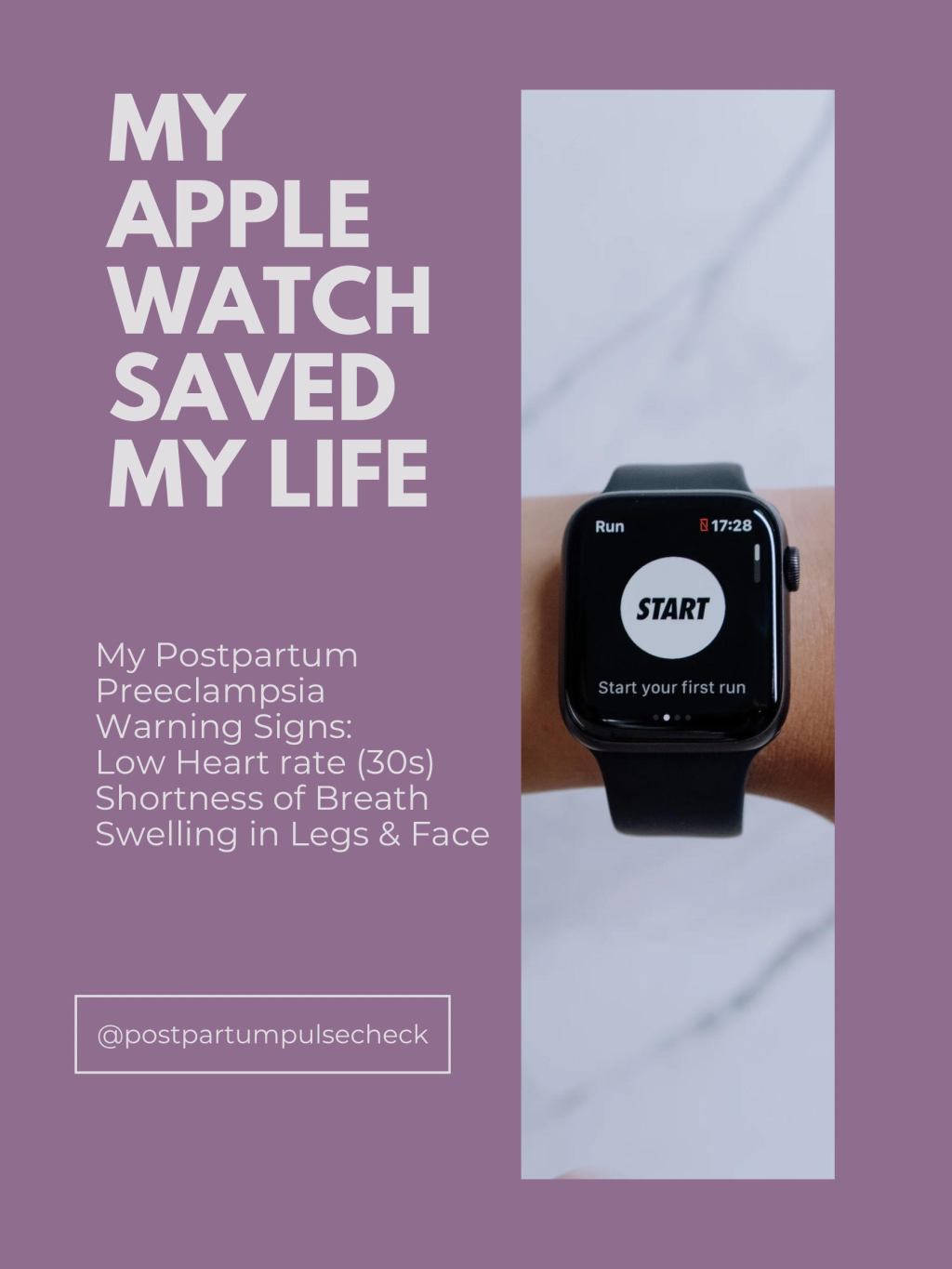
I know it sounds dramatic, but it’s the truth: my Apple watch saved my life.
The day after I was discharged home following the birth of my first daughter, my legs and feet blew up like balloons — to the point where I couldn’t even fit shoes on. With my healthcare background, and trying to reason through the fact that I just had a C-section — major surgery — two days earlier, I assumed I could possibly have a blood clot in my legs. Since it was after hours, I called the on-call OB-GYN, who instructed me to return to the OB Emergency Department.
When I arrived at the hospital, they hooked me up to the monitor and I saw that my heart rate was 38 bpm (when my resting heart rate is usually 60 bpm, and the anxiety surrounding my situation should have elevated my pulse, not lowered it). The ultrasound doppler studies of my legs were negative for blood clots, and the midwife discharged me home, telling me I would sweat all of the swelling off in the upcoming days.
Over the course of the next two to three days, I continued to feel worse. I was exhausted, so swollen, and it progressively got harder to breathe when I did certain activities, like walk up and down the stairs of my house. I remember telling my husband that I felt like I was dying. On November 16th, six days after giving birth, my Apple watch alerted me that there had been a significant change in my resting heart rate. When I opened the Health App of my phone, I saw that my heart rate had been trending in the high 30s ever since the day I had gotten home from the hospital. My mom kept encouraging me to call my doctor again and get checked out. Her persistence — combined with my Apple watch notification — finally pushed me to reluctantly call.
I had been consistently checking my blood pressure, and the last reading I had gotten was 135/83 that morning when I woke up to feed the baby. As we were packing up the diaper bag to head downtown to my doctor’s appointment, the nurse called. She said, “Something in my gut is just telling me to send you back to the OB Emergency Department.” I remember sobbing to my mom from the back seat of the car with my newborn daughter next to me, telling her I felt like the boy who cried wolf.
When we arrived at the Emergency Department, we were taken back fairly quickly since the nurse had called ahead to tell them I was on the way. I’ll never forget how drastically my heart sank when I saw the first blood pressure reading of 180s/105. Working in outpatient neuro rehabilitation, I knew that was a stroke-level reading. I insisted that they take it again; I said this couldn’t possibly be right. The readings kept getting higher. A nurse practitioner came in and said, “I know this is really scary, but we’re about to give you a medication to bring your pressure down. You’re being admitted to the hospital and will be treated for postpartum preeclampsia.”
At the time, I worked in the healthcare as an occupational therapist in an outpatient neuro rehabilitation setting. My dad was finishing up his doctorate degree to become a nurse practitioner. I had several other family members in the medical field and none of us had ever heard of postpartum preeclampsia. I didn’t have a headache or blurry vision. I had dangerously high blood pressure with almost no symptoms. I was too tired to realize I didn’t feel like I had to pee. Meanwhile, the volume overload of excess fluid in my body was causing my kidneys to shut down and my heart rate to become dangerously low.
I’ll never be able to thank my older cousin Erin enough for gifting me that Apple watch for my birthday that year. I firmly believe it’s a big part of the reason I’m still here today.
So that’s where the idea for Postpartum Pulse Check came from: a personal mission to educate women, especially those who are not as fortunate to have the same level of support as me in their postpartum period, on the multitude of symptoms/warning signs for preeclampsia.
My postpartum preeclampsia symptoms included: shortness of breath, swelling of my legs/face, and decreased urination. Preeclampsia warning signs include: severe headaches, vision changes (blurred vision or seeing spots), pain in the upper right side of your abdomen, nausea, vomiting, and sudden weight gain of 3-5 pounds in a week.

 Postpartum Pulse Check
Leave a comment